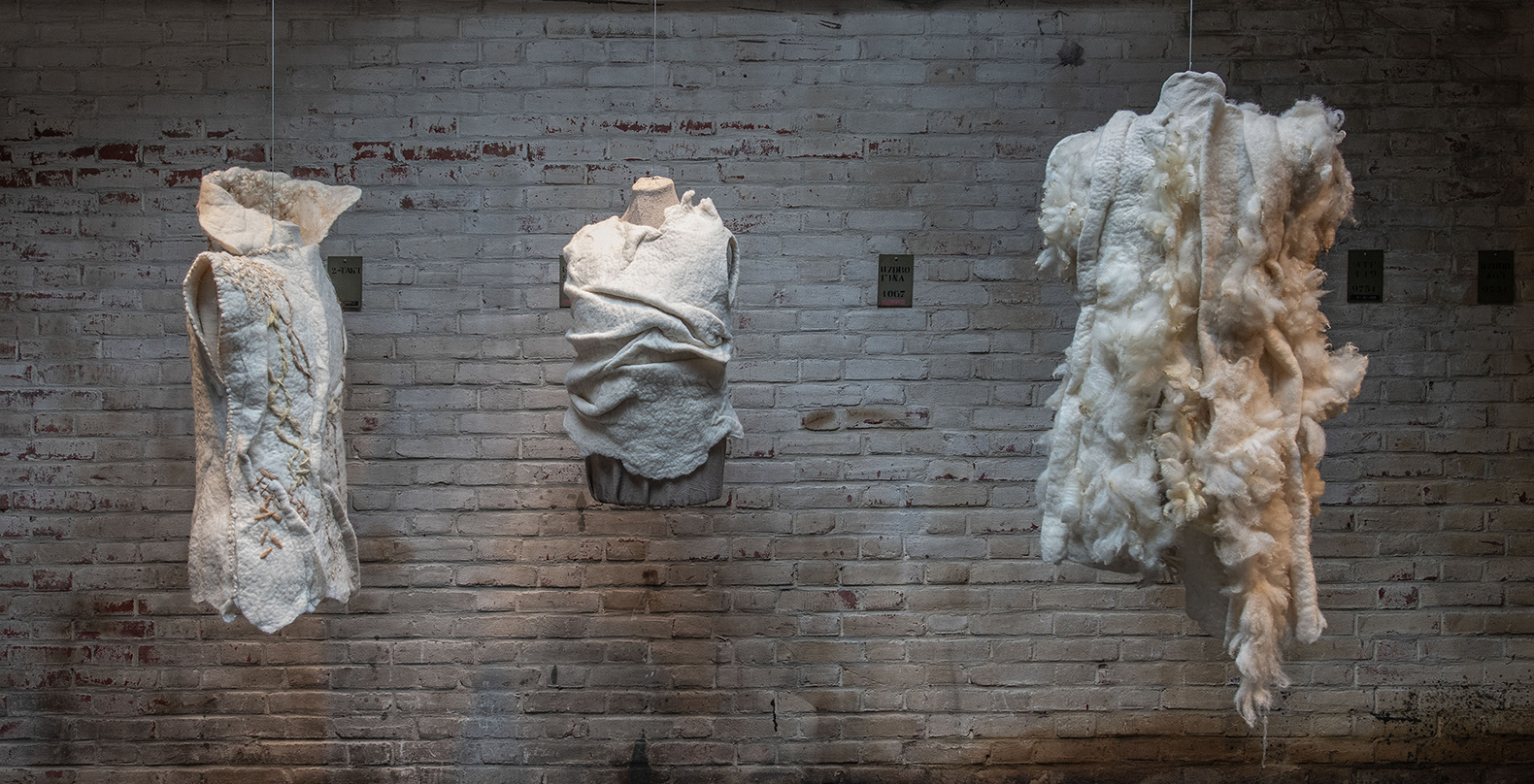
War and fear activate our basic instincts, shake our loves and redefine our lives. Urban and textile designers from Ukraine and NL join efforts finding new perspectives. Showing woolen armors and soft maps of hemp. Natural materials and traditional techniques as counterbalance for ecocide.
Why do people stay in cities close to war, hearing the frontline every day? Why do others leave? How do family and friends feel about this?
Every place in Ukraine has a specific history and context. Yet, they are also connected in sharing the same basic instincts in reaction to fear. Some people stay, others flee, everybody feels guilty. People get used to fear, and every new threat creates a new feeling of fear, a wave of horror. New questions, what to do, how to be prepared for the next blow.
In the city of Zaporizhzhia, the proximity of a large nuclear powerplant, the nearby frontline all together form a cascade of threats too much to cope with. Nevertheless, people stay, because they feel they must, they should. While others leave, for the same reason. Families are split, physically and emotionally. Mothers and daughters make different choices. None of them is good or wrong, all of them are disrupting and heartbreaking.
Ukrainian urbanist Daryna Pasyuta cooperated with Marjo van Schaik, Dutch textile designer. They transferred this collapse of emotions and events to a soft mapping on hemp cloths. It resulted into textile canvases combined with woolen armors.
When people are forced to flee their hometown, they struggle to survive in a turmoil of feelings. Longing for their homes.
Ukrainian and Dutch urbanist and architects from NGO Ro3kvit worked intensively together with refugees from Hirs’ka, an occupied village in the East of Ukraine. They explored the most painful losses and tried to convert this into a possible future.
Safety and protection are primary issues of course. However, on deeper reflection, the Hirs’ka people realised that they could re-create this lost past into a new future. Their vulnerability and resilience enabled the creation of new perspectives related to the old memories.
They discovered that they above all miss nature, culture and people. Thoughts of the landscape with its specific plants, water and seasonal smells moved them deeply. Shared experiences like dancing, celebrating, hiking, playing together were the most touching memories. Building on that they tried to draw new maps of their beloved city, showing nature and culture. The urbanists created a book with these unique maps as a soft archive. For this exhibitonthese are printed on hemp and shown in combination with woolen coats reflecting vulnerability and hope.
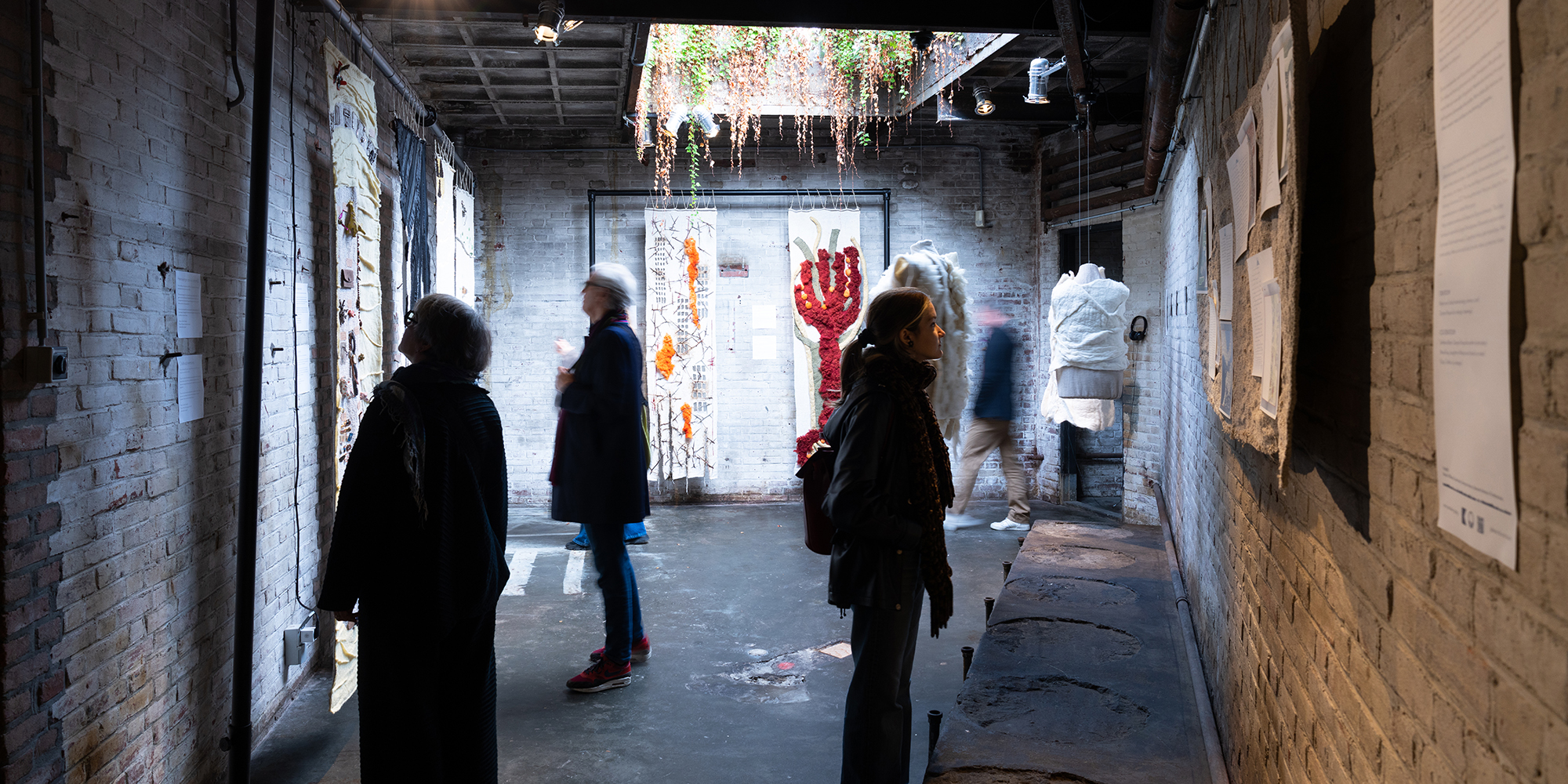
This project is a cooperation between designers from Ukraine and the Netherlands, driven by a deep desire for peace and freedom, and an end to the urbacide and ecocide that is war. All people involved, designers, refugees, volunteers and family members care about each other, about nature, about Ukraine.
All materials used are natural or re-used. All ‘maps’ are made on woven hemp from Carpathians. The felted and embroidery wool comes from Dutch sheep regarded as waste. All dyes used are made from natural materials, such as birch leaves, sorrel root, rapeseed flowers and chestnut. All designs of maps are based on stories of people: soft mapping introducing a new kind of urban mapping. All designs of cloth are inspired on traditional patterns and techniques combined with new interpretations and practices.
Featuring: Alisa Aleksandrova, Denys Barabanza, Sofiia Bondar, Daryna Pasyuta, Tetiana Samiliv, Marjo van Schaik, Fulco Treffers, Jolanta Zarzycka
Co-creators: Dmytro Baidiuk,Sonia Dauer, Mariia Prokofeva, Nina Ruig
Curators: Marjo van Schaik, Fulco Treffers
Narada is initiator of this project. Narada wants to connect Eastern and Western Europe through cultural activities such as architecture, urban planning, design, visual arts and performing arts. Narada provides organisational and financial support.
Ro3kvit is a coalition of 100+ Ukrainian and international professionals united for Ukraine’s recovery, plus a Kyiv-based NGO with a dedicated Ukrainian team ready to work on projects. Among them are researchers, designers, policy advisers and educators from diverse backgrounds ranging from architecture and urban planning to sociology and ecology. Ro3kvit supports the project in terms of content.
Come see this impressive exhibition – and get inspired by the hopeful ideas for the world of tomorrow.
Entry to the exhibitions is free of charge.